
 By Admin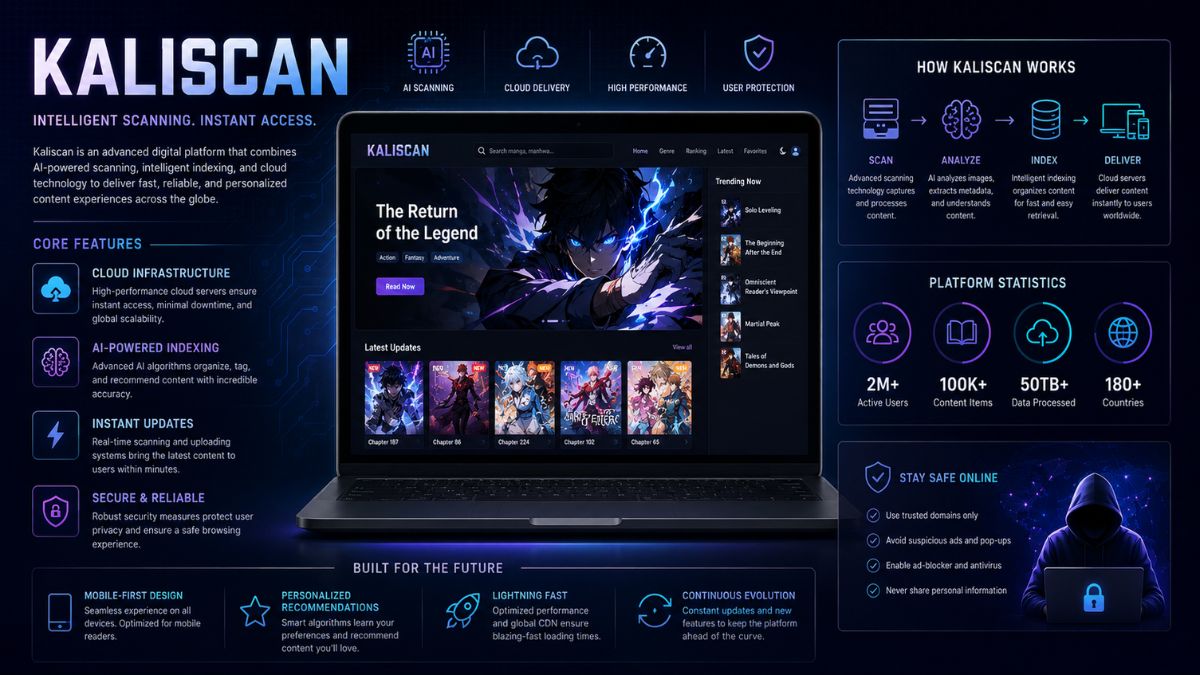
In the fast-moving digital world, new platforms and technologies appear almost every day. Some disappear quickly, while others gradually gain attention because they solve real-world problems. One name that has recently started appearing across online discussions is Kaliscan. Depending on the context, Kaliscan is associated with digital content aggregation, intelligent scanning systems, automation frameworks, and adaptive online platforms. Many users first encounter the term while searching for manga or manhwa reading platforms, while others view it as a broader technology ecosystem focused on scanning, indexing, and intelligent data handling.
What makes Kaliscan particularly interesting is how it represents several modern technology trends at once:
- Cloud-based content delivery
- AI-assisted indexing and scanning
- Real-time data management
- Distributed web infrastructure
- User-driven digital ecosystems
- Adaptive online platforms
The growing popularity of Kaliscan reflects a larger shift happening in technology today. Users increasingly demand instant access, personalized experiences, faster updates, and scalable digital systems. Platforms that can deliver these capabilities efficiently tend to attract strong online communities.
Understanding What Kaliscan Really Is
Some people describe Kaliscan as a digital scanning framework, while others identify it as a manga and manhwa aggregation platform. In broader technological discussions, it is often portrayed as an adaptive system that combines automation, indexing, and intelligent content organization.

1. Fast Digital Accessibility
Modern users want information immediately. Kaliscan-style systems focus heavily on reducing delays between content availability and user access.
2. Automated Organization
Instead of relying entirely on manual categorization, intelligent indexing methods help structure large amounts of content efficiently.
3. Scalable Infrastructure
Cloud hosting and distributed systems allow platforms to serve large audiences while maintaining acceptable performance levels.
These characteristics are common among modern digital ecosystems that rely on automation and real-time synchronization.
The Technology Behind Kaliscan
Kaliscan’s technological identity appears to revolve around several important computing concepts.
Cloud Infrastructure
Cloud computing plays a critical role in scalable digital platforms. Systems like Kaliscan typically rely on distributed servers and content delivery networks to reduce latency and improve reliability.

- Faster content loading
- Global accessibility
- Better scalability
- Reduced downtime
- Easier maintenance
- Dynamic storage expansion
This explains why modern platforms can handle millions of simultaneous users without completely collapsing under traffic loads.
AI-Powered Content Indexing
Artificial intelligence is becoming central to content management systems. Many modern scanning and aggregation platforms use AI to:
- Organize metadata
- Detect duplicate files
- Improve search accuracy
- Recommend personalized content
- Analyze user behavior
- Optimize caching systems
Machine learning systems continuously improve as more users interact with the platform.
For example, recommendation engines learn patterns such as:
- Preferred genres
- Reading behavior
- Session duration
- Update timing preferences
- User engagement levels
This enables smarter personalization over time.
Adaptive Web Technologies
Modern web applications are far more advanced than traditional websites. Platforms similar to Kaliscan frequently use:
- Progressive Web Apps (PWAs)
- Responsive design systems
- API-driven architecture
- Edge caching
- Real-time synchronization
These technologies allow platforms to function efficiently across:
- Smartphones
- Tablets
- Desktop computers
- Smart TVs
- Low-bandwidth networks
Kaliscan and the Rise of Digital Content Aggregation
One of the most recognized associations of Kaliscan is with digital comic aggregation, especially manga and manhwa content. Several online discussions identify Kaliscan as a platform that rapidly publishes translated comic chapters for global readers.

Traditional publishing models often involve:
- Licensing delays
- Regional restrictions
- Translation bottlenecks
- Publishing schedules
- Distribution limitations
Digital aggregation platforms attempt to bypass many of these limitations by using online-first delivery systems.
Why Users Are Drawn to Platforms Like Kaliscan
Several factors explain the rapid growth of digital aggregation systems:
Speed
Readers want immediate updates instead of waiting weeks or months.
Accessibility
Users from different countries can access the same content simultaneously.
Mobile Optimization
Most modern platforms prioritize smartphone reading experiences.
Personalization
Algorithms recommend content based on reading habits.
Massive Libraries
Digital storage allows platforms to host extensive collections.
These features align perfectly with modern digital consumption behavior.
The Role of Automation in Kaliscan-Like Platforms
Automation is one of the defining characteristics of next-generation digital systems.
Automated Scanning Systems
Scanning systems may include:
- Image recognition
- OCR (Optical Character Recognition)
- Metadata extraction
- Duplicate detection
- Auto-tagging
These technologies reduce manual workload dramatically.

Intelligent Recommendation Engines
Recommendation systems are a major technological advantage.
They work by analyzing:
- User engagement
- Click patterns
- Reading completion rates
- Trending content
- Similar audience behaviors
These systems rely heavily on machine learning models.
Some common recommendation techniques include:
| Recommendation Method | Purpose |
|---|---|
| Collaborative Filtering | Suggest similar user interests |
| Content-Based Filtering | Recommend related categories |
| Neural Recommendation Systems | Predict future interests |
| Hybrid Models | Combine multiple algorithms |
Such systems significantly increase user retention.
Cybersecurity Challenges Associated with Kaliscan
As digital platforms grow, cybersecurity becomes increasingly important.
Several articles discussing Kaliscan mention concerns related to legality, domain changes, mirror sites, and user safety.
Common Risks on Large Aggregation Platforms
1. Fake Mirror Websites
Unauthorized clone sites may attempt to imitate popular platforms.
2. Malicious Advertisements
Aggressive ad networks can expose users to malware risks.
3. Data Privacy Concerns
Some platforms collect browsing behavior and user analytics.
4. Domain Instability
Websites operating in legal gray areas may frequently change domains.
5. Phishing Attempts
Fraudulent login systems can steal credentials.
Legal and Ethical Considerations
One major discussion surrounding Kaliscan relates to digital copyright.
Aggregation platforms often operate in complicated legal environments. Some may distribute content without official licensing agreements.
This creates tension between:
- Accessibility
- Creator compensation
- Copyright law
- Fan communities
- Global digital demand
Technology evolves faster than legislation in many cases, which is why digital copyright remains a highly debated issue worldwide.
How AI Could Shape the Future of Kaliscan
Artificial intelligence may significantly transform platforms like Kaliscan in the future.
Potential AI Enhancements
Real-Time Translation
AI translation models are improving rapidly.
Smart Content Moderation
Automated moderation systems can filter harmful material.
Voice Integration
AI narration may enhance accessibility.
Personalized UI Systems
Interfaces could dynamically adapt to user behavior.
Predictive Content Delivery
AI could preload likely next chapters before users request them.
As AI models improve, platforms may become far more interactive and intelligent.
Kaliscan and Mobile-First Technology
Mobile devices dominate internet usage today.
Because of this, platforms increasingly adopt mobile-first design strategies.
Important Mobile Features
- Infinite scrolling
- Lightweight image compression
- Offline caching
- Gesture navigation
- Dark mode optimization
- Progressive loading
These features improve usability significantly on smaller screens.
Modern digital readers expect seamless performance regardless of internet speed.
The Growing Popularity of Web-Based Reading Platforms
Traditional desktop-focused platforms are declining in many entertainment sectors.
Instead, users prefer:
- Browser-based reading
- Instant access
- No installation requirements
- Cross-device synchronization
- Lightweight applications
This shift explains the growth of cloud-driven reading ecosystems.
Data Analytics and User Behavior
Large digital platforms rely heavily on analytics systems.
Important Metrics
| Metric | Purpose |
|---|---|
| Session Duration | Measure engagement |
| Bounce Rate | Identify user dissatisfaction |
| Reading Completion | Understand retention |
| Click-through Rate | Evaluate recommendations |
| User Frequency | Measure loyalty |
Analytics help platforms optimize:
- Content recommendations
- Server allocation
- Advertising systems
- User interfaces
- Feature development
This data-driven approach defines modern internet businesses.
The Role of APIs in Kaliscan-Style Platforms
Application Programming Interfaces (APIs) are essential to scalable web ecosystems.
APIs allow systems to:
- Synchronize databases
- Connect external services
- Support mobile applications
- Enable third-party integrations
- Streamline automation
Without APIs, modern web scalability becomes difficult.
The Future of Intelligent Scanning Systems
The broader idea behind Kaliscan-like technology extends beyond comics or entertainment.
Intelligent scanning systems could impact:
- Healthcare
- Education
- Finance
- Cybersecurity
- Logistics
- Smart cities
Healthcare
AI scanning tools may assist medical imaging systems.
Finance
Fraud detection systems increasingly rely on intelligent scanning algorithms.
Logistics
Warehouse automation uses computer vision scanning extensively.
Education
Digital libraries can organize vast learning databases automatically.
Benefits of Kaliscan-Style Digital Ecosystems
Faster Information Delivery
Users receive content more quickly than traditional systems allow.
Improved Scalability
Cloud infrastructure supports large user bases.
Better User Experience
AI personalization improves engagement.
Cross-Platform Accessibility
Users can access systems from nearly any device.
Automation Efficiency
Reduced manual labor lowers operational costs.
These advantages explain why automation-focused platforms continue expanding globally.
Challenges Facing the Future of Kaliscan
Despite its advantages, several challenges remain.
Legal Regulation
Copyright enforcement continues evolving.
Server Costs
Large-scale hosting infrastructure is expensive.
Cybersecurity Threats
Hackers constantly target large user platforms.
Content Authenticity
Misinformation and fake uploads remain concerns.
AI Bias and Moderation
Automated systems are not always accurate.
These obstacles will likely shape the next generation of digital platforms.
Could Kaliscan Become a Broader Technology Framework?
Some discussions portray Kaliscan as more than a reading platform. Certain sources describe it as an adaptive technological framework focused on automation, scalable intelligence, and modern data systems.
If this interpretation grows, Kaliscan could eventually represent:
- Smart scanning systems
- AI-enhanced indexing
- Distributed automation tools
- Real-time analytics ecosystems
- Intelligent data infrastructures
This broader interpretation aligns with major technology trends already shaping the digital economy.
Final Thoughts
Kaliscan represents an interesting example of how modern technology platforms evolve through community demand, automation, and digital accessibility. Whether viewed as a manga aggregation platform, an adaptive scanning ecosystem, or an emerging automation framework, it reflects the broader transformation happening across the internet today.
Several important themes emerge from the rise of Kaliscan:
- Users prioritize speed and accessibility
- AI is becoming central to digital organization
- Cloud infrastructure drives scalability
- Automation increasingly replaces manual workflows
- Cybersecurity and legality remain major concerns
The future of platforms like Kaliscan will likely depend on how successfully they balance innovation, legality, performance, and user trust.
As digital ecosystems continue evolving, technologies built around intelligent scanning, adaptive indexing, and automated delivery systems may become fundamental parts of the modern internet experience. Kaliscan, in many ways, symbolizes this ongoing transition toward smarter and faster digital infrastructure.