
 By Admin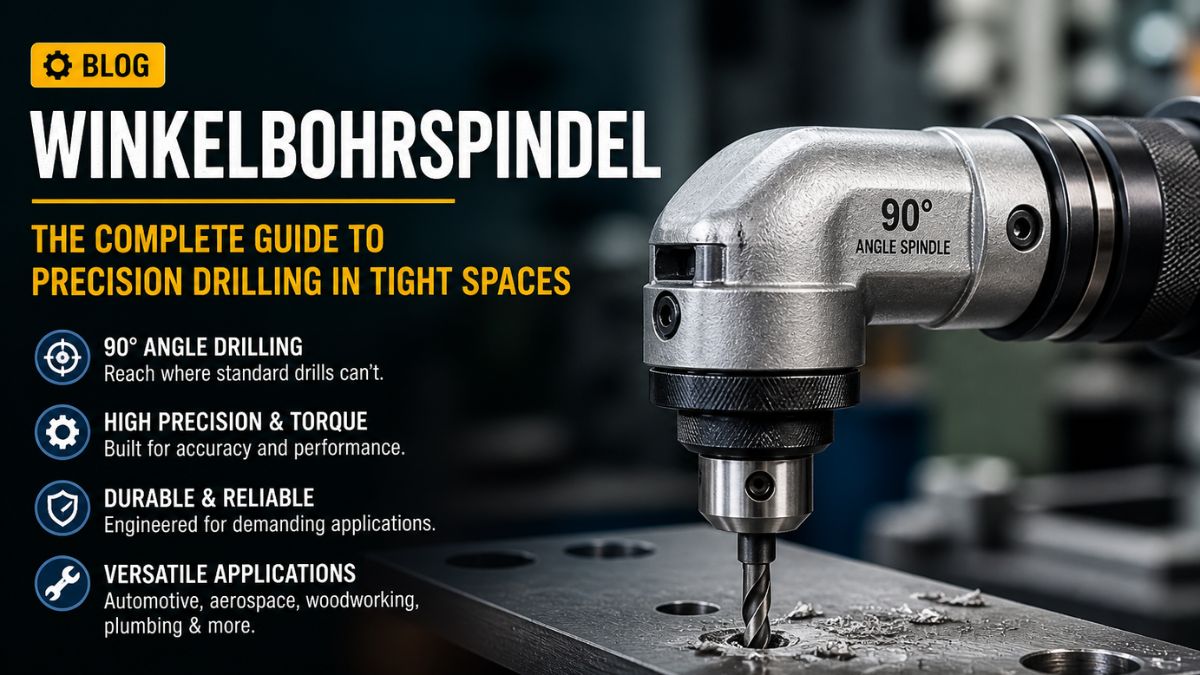
Introduction
In modern machining and precision engineering, space constraints are often one of the biggest challenges. Whether you’re working inside a complex mechanical assembly, automotive engine bay, or a tight industrial structure, conventional drilling tools can quickly become ineffective. This is where the Winkelbohrspindel—also known as a right-angle drill spindle—steps in as a game-changing solution.
A Winkelbohrspindel allows you to drill holes at angles, particularly 90 degrees, in confined spaces where a standard drill simply cannot reach. But beyond that simple function lies a powerful, versatile tool that is widely used in industries ranging from automotive and aerospace to woodworking and DIY craftsmanship.
In this detailed guide, we’ll explore everything you need to know about the Winkelbohrspindel—from its design and working principle to its applications, benefits, and buying considerations.
What is a Winkelbohrspindel?
A Winkelbohrspindel is a mechanical attachment or standalone tool designed to transmit rotational motion at a right angle. It connects to a drill or machine spindle and redirects the drilling axis, allowing users to operate in restricted or awkward positions.
Key Features:
- 90-degree drilling capability
- Compact and space-saving design
- High torque transmission
- Durable metal housing
- Compatibility with various drill types
How Does a Winkelbohrspindel Work?

At the heart of a Winkelbohrspindel is a set of bevel gears. These gears change the direction of rotation from the input shaft to the output spindle, typically at a 90-degree angle.
Working Mechanism:
- The primary drill rotates the input shaft.
- The bevel gears transfer motion at a right angle.
- The output spindle rotates the drill bit.
This efficient transfer of power ensures minimal energy loss and consistent drilling performance even in tight environments.
Types of Winkelbohrspindel
1. Manual Attachments
These are add-ons that can be fitted onto standard drills. Ideal for DIY users and light-duty tasks.
2. Industrial Winkelbohrspindel
Used in CNC machines and manufacturing setups, these are built for high precision and durability.
3. Compact Models
Designed for ultra-tight spaces, such as inside cabinets or engine compartments.
4. Heavy-Duty Versions
Engineered for tough materials like metal and concrete, offering higher torque and durability.
Applications of Winkelbohrspindel

The versatility of a Winkelbohrspindel makes it invaluable across multiple industries.
Automotive Industry
Mechanics use it to drill or fasten bolts in engine compartments where space is limited.
Woodworking
Perfect for installing hinges and screws, or for drilling inside cabinets and furniture.
Aerospace Engineering
Used for precision drilling in aircraft components where accuracy is critical.
Plumbing & Electrical Work
Helps professionals drill holes behind walls, pipes, and tight corners.
Advantages of Using a Winkelbohrspindel
1. Accessibility
Reach areas that are otherwise impossible with standard tools.
2. Precision
Maintain drilling accuracy even in awkward angles.
3. Time Efficiency
Reduces the need for disassembly or repositioning of components.
4. Versatility
Compatible with various drills and materials.
5. Cost-Effective
Prevents the need for specialized machinery in many cases.
Limitations to Consider
While highly useful, a Winkelbohrspindel is not without drawbacks:
- Slight reduction in torque compared to direct drilling
- May require practice for precise control
- Wear and tear of gears over time
- Limited suitability for extremely heavy-duty operations (in basic models)
How to Choose the Right Winkelbohrspindel
Key Buying Factors:
1. Compatibility
Ensure it fits your drill or machine.
2. Material Quality
Look for hardened steel gears and durable housing.
3. Torque Rating
Choose according to the intensity of your tasks.
4. Size & Design
Compact designs are better for tighter spaces.
5. Brand Reputation
Reliable manufacturers often offer better durability and warranties.
Maintenance Tips
To keep your Winkelbohrspindel in top condition:
- Lubricate gears regularly
- Avoid overloading the tool
- Clean after each use
- Store in a dry environment
- Inspect for wear and tear periodically
Safety Tips
Safety should always be a priority:
- Wear protective gloves and eyewear
- Ensure the attachment is securely fitted
- Use appropriate drill speeds
- Avoid excessive force
Future of Winkelbohrspindel Technology
With advancements in manufacturing and engineering, modern Winkelbohrspindels are becoming more efficient and durable. Innovations such as lightweight alloys, improved gear systems, and enhanced ergonomics are shaping the future of this essential tool.
We can expect smarter, more adaptable designs that integrate seamlessly with automated and CNC systems.
Conclusion
The Winkelbohrspindel is more than just a tool—it’s a practical solution to one of the most common challenges in drilling: accessibility. Whether you’re a professional mechanic, engineer, or DIY enthusiast, this tool can significantly improve your efficiency and precision.
By understanding its mechanism of operation, applications, and limitations, you can make an informed decision and fully leverage its capabilities in your projects.
FAQs
What does “Winkelbohrspindel” mean?
It’s a German term that translates to “angle drilling spindle,” referring to a tool that enables drilling at right angles.
Can I use it with any drill?
Most models are compatible with standard drills, but always check specifications.
Is it suitable for heavy-duty work?
Some industrial models are, but basic attachments are better for light to medium tasks.
Does it reduce drilling power?
Slightly, due to the gear mechanism, but the difference is usually minimal.