
 By Admin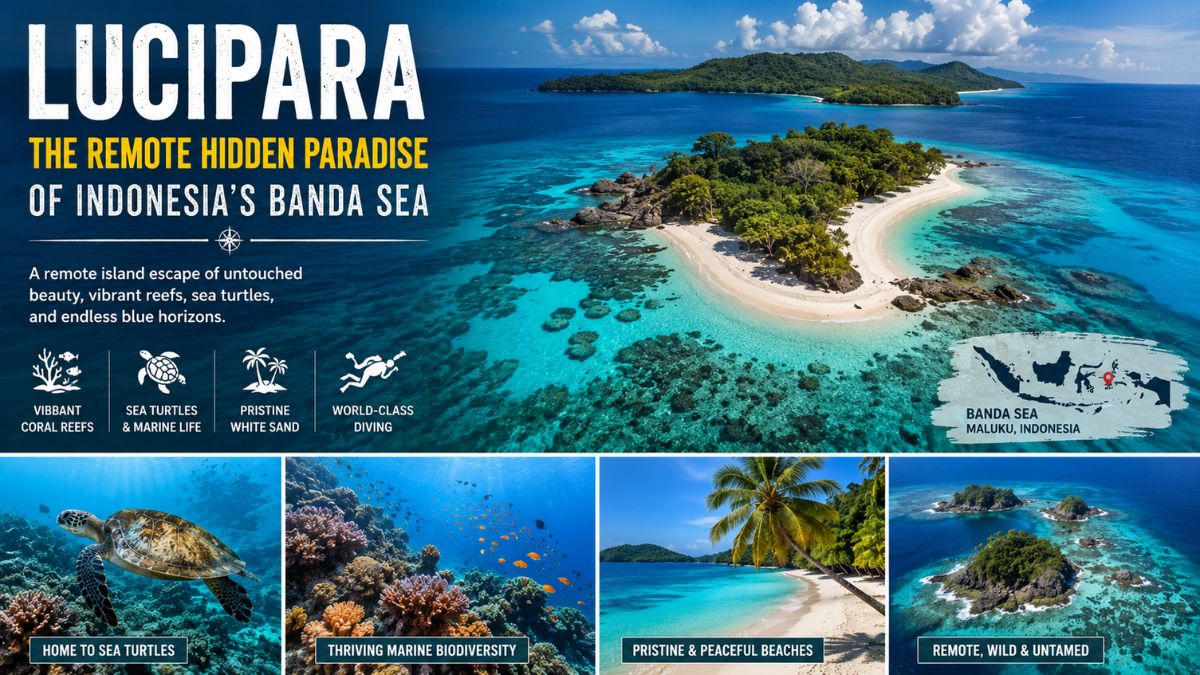
Lucipara evokes a sense of distance, tranquility, and untouched nature. Situated in Indonesia’s Banda Sea, this remote island group is neither a bustling tourist hub nor a city, nor a typical beach resort. It is best described as a secluded marine landscape, defined by reefs, deep waters, seabirds, sea turtles, monsoon winds, and centuries of travel across the eastern Indonesian archipelago. Those intrigued by Lucipara often seek answers: Where exactly is it? What distinguishes it? Why do divers, sailors, and marine enthusiasts speak of it with such esteem? The explanation lies in its geography. Lucipara remains far from urban chaos, encircled by open sea, coral reefs, and fragile ecosystems that render the area both captivating and demanding.
Where Is Lucipara Located?
The Lucipara Islands are located in Indonesia’s remote Banda Sea, south of Ambon in the Maluku region. The Banda Sea itself is one of Southeast Asia’s most fascinating marine environments, famous for its volcanic history, deep ocean trenches, ancient spice trade routes, and exceptional biodiversity.
The region sits far from Indonesia’s major tourism centers, which is one reason Lucipara has remained relatively unknown to mainstream travelers.
Reaching Lucipara is not simple. There are no commercial airports nearby, no beach resorts, and no quick transportation links. Most visitors arrive by liveaboard boats or specially organized marine expeditions that navigate the deep Banda waters.
This difficulty of access has become part of Lucipara’s identity.
For many travelers, getting there feels less like taking a vacation and more like entering one of the world’s final marine frontiers.
A Landscape Shaped by Ocean and Isolation
Lucipara’s natural beauty is impossible to ignore.
The islands themselves are relatively small, but the surrounding marine environment creates breathtaking scenery unlike anywhere else in Indonesia.
From above, the contrast between shallow coral reefs and the deep Banda Sea creates vivid color transitions — pale turquoise water suddenly dropping into intense dark blue depths.
This dramatic ocean landscape is one of Lucipara’s defining features.
Unlike heavily commercialized beach destinations, Lucipara has no artificial attractions designed for tourists. There are no crowded restaurants, beach clubs, shopping streets, or luxury resorts competing for attention.
Instead, visitors experience:
- White sand beaches
- Coral-fringed coastlines
- Endless ocean views
- Clear tropical skies
- Quiet, empty shores
- Untouched marine ecosystems
The simplicity is exactly what makes the islands unforgettable.
Lucipara feels less like a tourist destination and more like a forgotten corner of the natural world.
The Marine Life of Lucipara
Beneath the surface, Lucipara reveals an entirely different world.
The Banda Sea is internationally respected for its extraordinary marine biodiversity, and Lucipara reflects that reputation beautifully.
Divers who explore the reefs often describe them as vibrant, healthy, and remarkably alive.
Coral Reefs and Underwater Ecosystems
The reefs surrounding Lucipara contain:
- Hard coral formations
- Soft coral gardens
- Sea fans
- Reef walls
- Deep drop-offs
- Coral slopes
These underwater ecosystems provide shelter and breeding grounds for countless marine species.
The remote location has helped preserve much of the reef system, especially compared to reefs closer to urban coastlines where pollution and tourism pressure are far more severe.
However, even remote reefs are not fully protected from modern environmental threats.
Marine Species Found Around Lucipara
The waters surrounding Lucipara support an impressive variety of marine life.
Depending on the season and diving conditions, visitors may encounter:
- Reef fish
- Tuna
- Barracuda
- Sea turtles
- Giant trevally
- Manta rays
- Sharks
- Soft coral species
- Pelagic fish
Strong ocean currents moving through the Banda Sea help bring nutrients into the ecosystem, supporting large marine populations.
For underwater photographers and marine biologists, Lucipara offers exceptional opportunities to observe ocean ecosystems in a relatively undisturbed state.
Lucipara and Sea Turtles
One of Lucipara’s most important ecological roles involves sea turtles.
The islands are often associated with turtle nesting areas due to their remote beaches and low levels of human activity.
Why Remote Islands Matter for Turtles
Sea turtles require very specific environmental conditions for nesting:
- Quiet beaches
- Minimal human disturbance
- Limited artificial lighting
- Stable sand conditions
- Safe migration routes
Lucipara provides many of these conditions naturally.
Because the islands remain isolated from mass tourism, turtles can still access beaches without constant disruption from hotels, vehicles, or nightlife activity.
But these habitats remain fragile.
Climate change, rising sea temperatures, plastic pollution, illegal fishing, and coastal erosion all threaten marine ecosystems throughout Indonesia — including Lucipara.
Protecting turtle habitats will become increasingly important in the years ahead.
Why Divers Are Drawn to Lucipara
Lucipara has become especially attractive to experienced divers searching for remote and challenging dive locations.
Unlike beginner-friendly resort diving destinations, Lucipara is considered an advanced marine environment.
What Makes Diving Here Special?
Divers visit Lucipara for:
- Deep reef walls
- Strong currents
- Exceptional visibility
- Pelagic species encounters
- Remote underwater terrain
- Less crowded dive sites
The feeling of isolation adds to the experience.
Many divers describe the Banda Sea as one of the few places left where underwater exploration still feels genuinely adventurous.
There is no sense of overcrowding or commercial tourism underwater. Instead, divers encounter vast reef systems largely shaped by nature itself.
The Challenge of Reaching Lucipara
Traveling to Lucipara is not easy — and that difficulty is part of what keeps the islands so well preserved.
Access Requires Planning
Visitors usually reach Lucipara through:
- Liveaboard dive expeditions
- Private boats
- Specialized marine tours
- Multi-island Banda Sea routes
There are no large tourism facilities waiting upon arrival.
Travel conditions depend heavily on:
- Weather patterns
- Wind conditions
- Ocean swells
- Seasonal monsoons
- Sea safety
The Banda Sea can become unpredictable during certain times of the year, making careful planning essential.
For travelers used to luxury tourism and convenience, Lucipara may feel challenging.
But for adventurers, that remoteness is exactly what makes the experience meaningful.
The Historical Importance of the Banda Sea
Lucipara may feel isolated today, but historically, the Banda Sea played an important role in global trade and exploration.
For centuries, these waters connected the famous Spice Islands of Maluku to international maritime routes.
European traders, explorers, and navigators crossed the Banda Sea searching for:
- Nutmeg
- Cloves
- Exotic goods
- Strategic trade routes
Small islands like Lucipara often served as navigation references, temporary shelter points, or hazards for passing ships.
Old nautical maps frequently recorded isolated reef systems and islands throughout the Banda region because they were crucial for maritime navigation.
Today, that same sense of remoteness still remains.
Why Lucipara Still Feels Untouched
The word “untouched” is often overused in travel marketing, but Lucipara genuinely comes close to deserving it.
The islands remain largely free from:
- Mass tourism
- Large-scale development
- Commercial resorts
- Urban infrastructure
- Crowded beaches
There are no nightlife districts or heavily developed tourism zones here.
Instead, visitors encounter a rare form of silence and natural isolation that has disappeared from many modern travel destinations.
A Different Kind of Luxury
Lucipara’s luxury is not about five-star hotels.
Its luxury comes from:
- Solitude
- Natural beauty
- Ocean silence
- Empty beaches
- Healthy reefs
- Authentic wilderness
For travelers seeking peace rather than entertainment, Lucipara offers something deeply refreshing.
Conservation Challenges Facing Lucipara
Although Lucipara appears pristine, its ecosystems remain vulnerable.
Threats to the Environment
Some of the biggest environmental challenges include:
Climate Change
Rising ocean temperatures threaten coral reef health across Indonesia.
Plastic Pollution
Ocean currents carry plastic waste even into remote marine environments.
Illegal Fishing
Unsustainable fishing practices can damage reefs and reduce biodiversity.
Careless Tourism
Poorly managed tourism may eventually harm turtle nesting beaches and coral ecosystems.
Even isolated islands cannot escape global environmental pressures forever.
Responsible Tourism Matters
As Lucipara becomes more widely known, responsible tourism will become increasingly important.
Visitors can help protect the islands by:
- Avoiding reef damage
- Not disturbing wildlife
- Reducing plastic waste
- Respecting local marine regulations
- Using eco-friendly tour operators
- Supporting conservation-focused travel
The goal should not be turning Lucipara into another crowded tourism hotspot.
Instead, its future depends on maintaining the balance between exploration and preservation.
Lucipara as a Symbol of Indonesia’s Hidden Marine Wealth
Indonesia is home to more than 17,000 islands, yet much of its marine beauty remains unknown to the outside world.
Most travelers recognize destinations such as:
- Bali
- Komodo
- Raja Ampat
- Lombok
- The Gili Islands
But Lucipara represents a quieter side of Indonesia — one that still exists beyond mainstream tourism.
The Banda Sea itself contains extraordinary biodiversity, deep ocean ecosystems, volcanic landscapes, and centuries of maritime history.
Lucipara is part of that hidden world.
Its importance does not come from luxury development or international fame.
Its importance comes from remaining connected to nature in a direct, powerful, and increasingly rare way.
The Emotional Experience of Visiting Lucipara
Many travelers describe Lucipara not simply as beautiful, but emotional.
The isolation changes the way people experience time and space.
Without crowds, noise, advertisements, or urban distractions, visitors become more aware of:
- Ocean sounds
- Wind movement
- Wildlife activity
- Sunlight on water
- The scale of the sea
For some, this creates a feeling of freedom.
For others, it becomes a reminder of how disconnected modern life has become from nature.
Lucipara leaves a lasting impression because it offers something that cannot easily be manufactured or commercialized: authenticity.
Conclusion
Lucipara is one of Indonesia’s most remote and fascinating marine destinations — a hidden paradise shaped by coral reefs, deep ocean waters, sea turtles, and extraordinary isolation.
Unlike mainstream tourist islands, Lucipara does not offer easy luxury or commercial entertainment.
Its beauty comes from its wildness.
For divers, it offers adventure and world-class marine exploration. For conservationists, it represents an ecosystem worth protecting. And for travelers seeking genuine remoteness, it offers something increasingly difficult to find in the modern world: silence, solitude, and untouched natural beauty.
As more people discover Lucipara, protecting its fragile environment will become more important than ever.
Because places like Lucipara are valuable not simply because they are beautiful — but because they remind us how extraordinary the natural world still is when allowed to remain free.