
 By Admin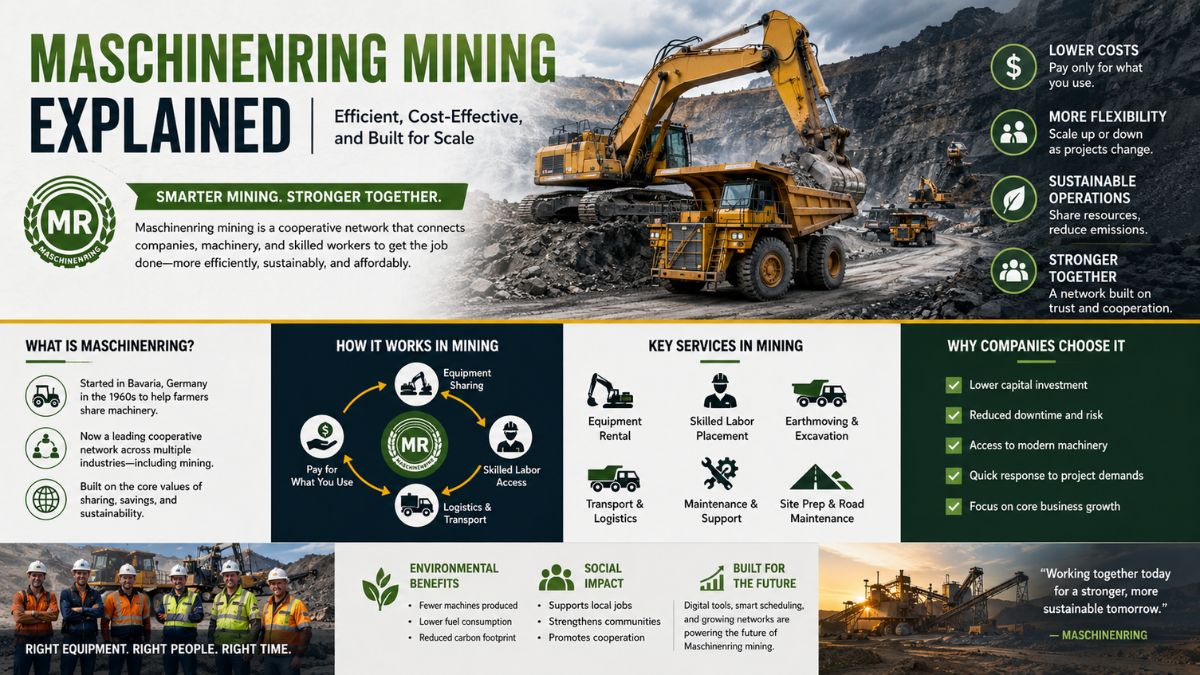
Mining has always been one of the world’s most demanding industries. From massive excavation equipment to highly specialized labor, running a successful mining operation requires enormous investment, careful planning, and constant adaptation. But in recent years, a quieter revolution has been changing how mining companies operate — and it’s called Maschinenring mining.
Originally designed to help farmers share tractors and agricultural machinery in rural Germany, the Maschinenring model has evolved into something far bigger. Today, it is helping mining companies reduce costs, improve flexibility, access skilled workers faster, and operate more sustainably.
Instead of every company buying millions of dollars’ worth of equipment that may sit unused for months, the Maschinenring system allows businesses to share machinery, labor, and operational resources through a cooperative network. The result is a more efficient, cost-effective, and environmentally responsible approach to industrial work.
As global mining companies face increasing pressure to improve efficiency while lowering environmental impact, the Maschinenring model is gaining attention across Europe and beyond.
The Origins of Maschinenring
The word “Maschinenring” comes from German and literally means “machine ring.”
The concept began in Bavaria, Germany, during the 1960s when local farmers faced a common problem: agricultural machinery was becoming too expensive for individual ownership.
Instead of every farmer purchasing their own tractors, harvesters, and tools, communities formed cooperative groups where equipment could be shared among members. This reduced financial pressure and ensured machines were used more efficiently.
From Farms to Industrial Operations
Over time, the idea proved so successful that it expanded beyond agriculture into industries such as:
- Forestry
- Construction
- Landscaping
- Logistics
- Renewable energy
- Mining
Today, Maschinenring networks operate across several European countries and support thousands of businesses through shared-resource systems.
Why Mining Companies Needed a Better Model
Mining operations are incredibly resource-intensive.
A single excavator or drilling machine can cost hundreds of thousands — or even millions — of dollars. Beyond the purchase price, companies must also handle:
- Maintenance costs
- Fuel expenses
- Transportation
- Equipment storage
- Skilled operators
- Insurance
- Downtime losses
For many small and medium-sized mining companies, owning every machine outright simply isn’t practical.
This is where the Maschinenring approach changes the game.
How Maschinenring Mining Works
At its core, Maschinenring mining operates like a cooperative resource-sharing network.
Mining companies join the network as members and gain access to:
- Heavy machinery
- Specialized mining equipment
- Skilled labor
- Transport services
- Site preparation crews
- Maintenance teams
- Logistics support
Instead of investing heavily in rarely used equipment, companies can rent or share resources only when needed.
A Real-World Example
Imagine a mining contractor working on a six-month excavation project.
Normally, they would need to:
- Purchase expensive earthmoving equipment
- Hire full-time machine operators
- Arrange transportation and maintenance
- Cover long-term operational costs
With Maschinenring, the contractor can instead:
✔ Rent equipment temporarily
✔ Access certified operators
✔ Scale labor according to project size
✔ Return machinery after completion
This dramatically reduces financial risk.
Heavy Equipment Sharing in Mining
One of the most valuable aspects of Maschinenring mining is equipment access.
Common Shared Mining Equipment
Mining companies within the network often share:
- Excavators
- Bulldozers
- Drilling rigs
- Crushers
- Loaders
- Dump trucks
- Conveyors
- Screening machines
This model ensures expensive machinery stays productive instead of sitting idle for long periods.
The Financial Benefits of Maschinenring Mining
Cost reduction is one of the main reasons the system continues growing across Europe.
Lower Capital Investment
Mining companies avoid massive upfront equipment purchases.
Instead of tying up millions in machinery ownership, businesses can invest capital into:
- Exploration
- Workforce development
- Safety systems
- Expansion projects
- Environmental compliance
Reduced Maintenance Costs
Owning heavy equipment means constant maintenance expenses.
Shared systems distribute these costs across multiple users, making operations more affordable.
Better Resource Utilization
Machines used by multiple companies remain active more often, improving overall efficiency.
Skilled Labor on Demand
Modern mining operations require trained workers who understand safety procedures and heavy equipment operation.
Finding qualified labor quickly can be difficult, especially during large projects.
Maschinenring networks solve this by maintaining pools of experienced workers.
Available Workforce Support
Mining companies can access:
- Excavator operators
- Safety supervisors
- Truck drivers
- Drilling technicians
- Maintenance engineers
- Site coordinators
This allows businesses to expand operations rapidly without permanently increasing payroll costs.
Flexibility: The Biggest Competitive Advantage
Mining projects rarely remain predictable.
A site may suddenly require:
- More excavation capacity
- Emergency repairs
- Additional transport support
- Seasonal workforce increases
Traditional ownership models struggle to adapt quickly.
Maschinenring networks provide flexibility that modern mining operations desperately need.
Scale Up or Scale Down Easily
Companies can increase equipment and labor during busy periods and reduce costs when projects slow down.
This helps businesses stay financially stable even during market fluctuations.
Digital Technology Is Strengthening the Model
Modern Maschinenring systems are becoming increasingly digital.
Many cooperative networks now use online platforms that allow members to:
- Reserve machinery instantly
- Schedule operators
- Monitor equipment availability
- Track operational costs
- Coordinate logistics in real time
Digitalization has made resource sharing smoother, faster, and far more efficient than traditional manual scheduling systems.
Environmental Benefits of Maschinenring Mining
Mining often receives criticism for its environmental impact.
However, shared-resource systems can help reduce some of these challenges.
Fewer Machines, Lower Emissions
If ten companies each buy separate machinery, manufacturing emissions rise significantly.
But if those same companies share fewer machines efficiently, the environmental footprint decreases.
Sustainability Advantages
The Maschinenring model helps reduce:
- Equipment overproduction
- Fuel waste
- Idle machinery emissions
- Resource duplication
- Unnecessary transportation
Supporting Circular Economy Principles
The concept aligns strongly with the modern circular economy philosophy.
Instead of constant ownership and replacement, resources are used collaboratively and efficiently for longer periods.
This approach promotes:
- Sustainability
- Waste reduction
- Operational efficiency
- Smarter industrial growth
Community and Social Impact
One overlooked advantage of Maschinenring mining is its positive effect on local communities.
Local Employment Opportunities
Many workers within the network come from nearby regions.
This helps:
- Strengthen rural economies
- Create stable employment
- Support small contractors
- Keep economic activity local
Building Cooperation Instead of Competition
Unlike traditional industrial systems focused purely on competition, Maschinenring encourages collaboration between businesses.
Companies benefit from working together rather than operating in isolation.
Mining Regions Benefiting from Maschinenring
The model is especially popular in parts of Europe where mining and heavy industry remain important economic sectors.
Key Countries Using the System
- Germany
- Austria
- Switzerland
- Czech Republic
- Parts of Eastern Europe
Some regional networks have developed specialized mining divisions tailored specifically to extraction operations.
How Small Mining Companies Benefit Most
Large corporations often have enough capital to purchase equipment independently.
But small and medium-sized mining firms gain the greatest advantage from cooperative networks.
Why Smaller Operators Prefer Maschinenring
They benefit from:
- Lower startup costs
- Easier market entry
- Access to advanced machinery
- Reduced financial risk
- Workforce flexibility
This allows smaller firms to compete more effectively with larger companies.
Safety Advantages in Mining Operations
Mining safety is critical.
Shared workforce systems often improve safety because workers are professionally trained and certified before entering worksites.
Safety Services Include
- Equipment training
- Site safety inspections
- Emergency response planning
- Hazard management
- Compliance monitoring
This structured approach helps reduce workplace accidents and operational risks.
Challenges and Limitations
While Maschinenring mining offers many advantages, it is not perfect.
Coordination Challenges
Because equipment is shared among multiple companies, scheduling conflicts can sometimes occur.
If one project runs longer than expected, another member may experience delays.
Geographic Limitations
The model works best in regions with strong cooperative infrastructure.
Remote areas without established networks may struggle to access reliable services.
Dependence on Network Efficiency
The success of Maschinenring systems depends heavily on organization and communication.
Poor management can create issues such as:
- Equipment shortages
- Delayed transportation
- Worker availability conflicts
- Maintenance scheduling problems
Fortunately, digital management tools are helping reduce these challenges.
The Future of Maschinenring Mining
The future looks promising.
As mining companies face growing economic and environmental pressures, cooperative systems are becoming increasingly attractive.
Key Trends Driving Growth
1. Rising Equipment Costs
Heavy machinery continues becoming more expensive.
Shared ownership models reduce financial burden.
2. Sustainability Demands
Governments and environmental agencies are pushing industries toward greener operations.
Resource-sharing naturally supports sustainability goals.
3. Digital Transformation
AI-powered scheduling, GPS tracking, and automated fleet management are making cooperative systems more efficient than ever.
4. Workforce Shortages
Mining industries worldwide are struggling to find skilled labor.
Maschinenring networks provide faster access to trained professionals.
Could This Model Expand Globally?
While Maschinenring is strongest in Europe, many experts believe similar cooperative mining systems could expand worldwide.
Countries with growing mining sectors may increasingly adopt shared-resource models to reduce costs and improve sustainability.
Potential growth regions include:
- South America
- Canada
- Australia
- Africa
- Southeast Asia
As industries search for smarter operational models, the Maschinenring concept could become globally influential.
Conclusion
Maschinenring mining represents a powerful shift in how modern mining operations function.
Instead of relying solely on expensive ownership models, companies can now access machinery, labor, and services through cooperative networks that prioritize efficiency, flexibility, and sustainability.
The benefits are clear:
✔ Lower operational costs
✔ Greater flexibility
✔ Faster workforce access
✔ Reduced environmental impact
✔ Stronger community involvement
✔ Better resource utilization
As technology continues improving and industries become more sustainability-focused, the Maschinenring approach is likely to play an even bigger role in the future of mining.
What started as a simple farming cooperation in Bavaria has evolved into one of the smartest industrial resource-sharing systems in Europe.
And for modern mining companies, that may be exactly the future they need.
Frequently Asked Questions (FAQs)
1. What does Maschinenring mean?
Maschinenring is a German term meaning “machine ring.” It refers to cooperative systems where members share machinery, labor, and operational services.
2. Is Maschinenring only used in agriculture?
No. Although it began in farming, the model now supports industries such as mining, forestry, construction, landscaping, and logistics.
3. How does Maschinenring reduce mining costs?
Companies only pay for equipment and labor when needed, avoiding large upfront purchases and long-term maintenance costs.
4. Does Maschinenring provide skilled workers?
Yes. Many networks maintain pools of trained operators, engineers, technicians, and safety personnel.
5. Is Maschinenring environmentally friendly?
Yes. Shared machinery reduces unnecessary equipment production and improves overall resource efficiency.
6. Which countries use Maschinenring systems?
The system is strongest in Germany, Austria, and Switzerland, but similar cooperative models are expanding into other regions.