
 By Admin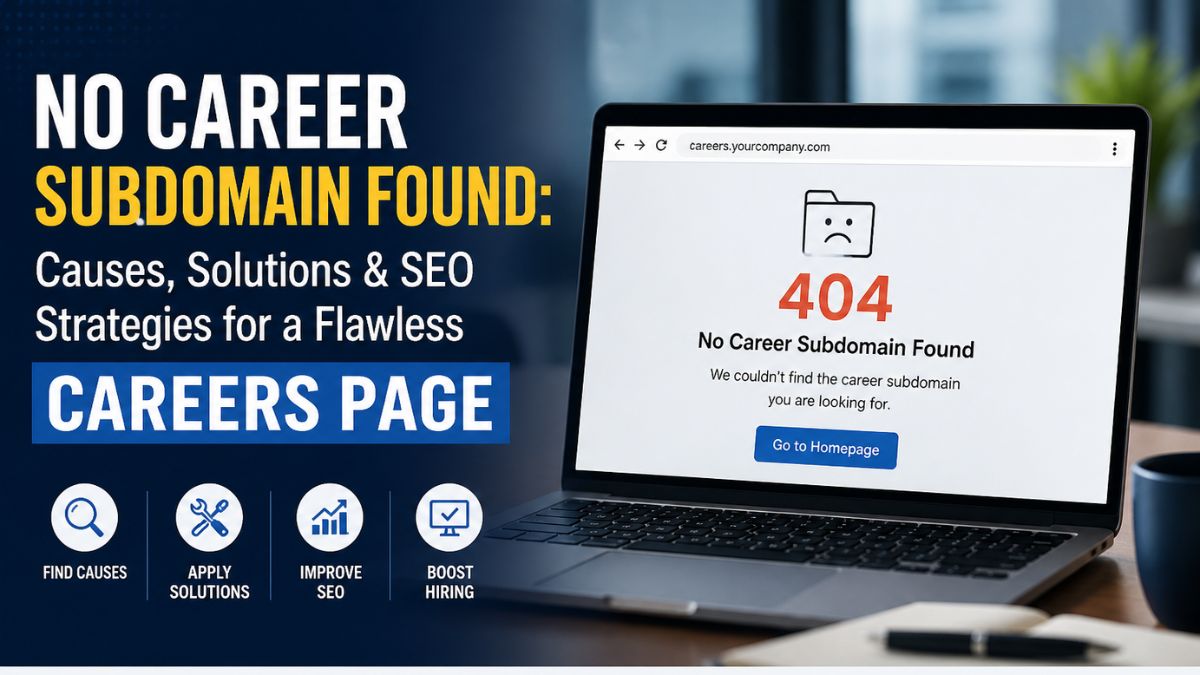
Introduction: Why This Error Matters More Than You Think

You click on a company’s careers page expecting to explore job opportunities, but instead, you’re greeted with a cryptic message: “keine karriere-subdomain gefunden.”
At first, it might seem like a minor glitch—something technical that will fix itself. But in reality, this small error can have major consequences. It can cost companies valuable talent, damage brand trust, and quietly hurt SEO rankings.
In this comprehensive guide, we’ll go far beyond the basics. You’ll learn:
- What this error actually means
- Why does it happen (in real-world scenarios)
- Step-by-step technical fixes
- SEO implications and recovery strategies
- Best practices to avoid it forever
By the end, you’ll have a complete understanding—whether you’re a developer, business owner, or blogger.
Understanding the Error in Depth
What does “keine karriere-subdomain gefunden” mean?
This German phrase translates to:
“No career subdomain found.”
It indicates that a website attempted to access a career-related subdomain, but the system couldn’t locate it.
Simple Example
Let’s say a company uses:
www.company.com→ Main websitecareers.company.com→ Careers page
If the careers subdomain is:
- Not created
- Misconfigured
- Offline
👉 The system throws this error.
The Role of Subdomains in Modern Websites

To truly understand the issue, we need to explore subdomains in detail.
What Is a Subdomain?
A subdomain is a prefix added to your main domain to organise content.
Example Structure:
- Main domain:
company.com - Subdomain:
careers.company.com
Why Businesses Use Career Subdomains
Companies don’t create subdomains randomly. There are strategic reasons:
1. Separation of Content
Careers pages often include:
- Job listings
- Application systems
- HR tools
Keeping them separate improves structure.
2. Integration with Hiring Platforms
Many companies use external systems like:
- ATS platforms
- Recruitment tools
These often require subdomains.
3. Scalability
As companies grow:
- Hiring needs expand
- Subdomains make scaling easier
Deep Dive: Root Causes of the Error

Let’s go deeper than the usual explanations. Here are the real technical causes behind this issue.
1. Subdomain Was Never Created
This is surprisingly common.
Scenario:
- Developer adds link to careers page
- DNS entry is never configured
👉 Result: The system cannot find Subdomainmain.
2. DNS Configuration Errors
DNS is the backbone of domain routing.
Common Problems:
- Missing A record
- Incorrect CNAME
- Wrong IP address
- Expired DNS settings
Even a small typo can be everything.
3. DNS Propagation Delays
After updating DNS:
- Changes take time (up to 48 hours)
During this period:
- Some users see the page
- Others see the error
4. Broken Internal Links
Websites evolve over time.
What happens:
- Careers page URL changes
- Old links remain
👉 Users click outdated links → error appears.
5. Third-Party ATS Failures
Many companies rely on:
- External job platforms
- Cloud-based HR systems
If these systems:
- Go offline
- Lose connection. Subdomain main stops working.
6. SSL Certificate Misconfiguration
Security matters.
If SSL:
- Doesn’t cover Subdomainmain
- Is expired
👉 Browsers block access → looks like Subdomainmain is missing.
7. Hosting or Server Issues
Even with the correct setup:
- Server downtime
- Hosting misconfiguration
👉 Makes Subdomainmain unreachable.
8. Firewall or CDN Problems
Sometimes the issue is deeper:
- CDN misrouting
- Firewall blocking requests
These can silently break access.
Real Impact: Why This Error Is Dangerous

This isn’t just technical—it’s business-critical.
Impact on Recruitment
- Lost applicants
- Reduced hiring efficiency
- Poor candidate experience
Impact on Brand Image
First impressions matter.
A broken careers page signals:
- Poor maintenance
- Lack of professionalism
Impact on SEO
Search engines notice:
- Broken links
- Crawl errors
- High bounce rates
👉 Result: Lower rankings
Financial Impact
- Wasted ad spend
- Lost talent acquisition opportunities
- Reduced ROI on campaigns
Step-by-Step Fix (Technical Guide)

Now let’s fix it properly.
Step 1: Confirm Subdomain Availability
Try accessing:
careers.yourdomain.comIf it doesn’t load:
- It may not exist
Step 2: Check DNS Records
Look for:
- A Record → Points to server
- CNAME Record → Points to another domain
Example:
careers.company.com → hosting providerStep 3: Validate Hosting Configuration
Ensure:
- Server recogniSubdomainmain
- The virtual host is set correctly
Step 4: Audit Website Links
Check:
- Navbar
- Footer
- Buttons
Fix outdated URLs.
Step 5: Fix SSL Issues
Make sure:
- SSL certificate includes Subdomainmain
- HTTPS works without warnings
Step 6: Test External Integrations
If using ATS:
- Reconnect APIs
- Verify endpoints
Step 7: Monitor Server Health
Use monitoring tools to:
- Detect downtime
- Get alerts instantly
Advanced Troubleshooting (For Developers)
Use DNS Tools
Commands:
nslookup careers.company.comdig careers.company.com
Check:
- IP resolution
- DNS propagation
Check Server Logs
Logs reveal:
- Errors
- Misconfigurations
Test CDN Settings
If using Cloudflare or similar:
- Verify DNS routing
- Disable proxy temporarily
Analyse Redirect Chains
Broken redirects can cause:
- Infinite loops
- Missing pages
SEO Recovery Strategy

If your site was affected, recovery is essential.
1. Fix All Broken Links
Use tools to:
- Identify errors
- Repair URLs
2. Implement 301 Redirects
Redirect old URLs to:
- New careSitemape
3. Update SiteSitemap: Update the sitemap to search engines.
4. Monitor Search Console
Check for:
- Crawl errors
- Indexing issues
5. Improve Page Experience
Ensure:
- Fast loading
- Mobile optimization
Subdomain vs Subdirectory: Which Is Better?
Let’s compare.
Subdomain
Example:careers.company.com
Pros:
- Scalable
- Flexible
Cons:
- Harder SEO management
Subdirectory
Example:company.com/careers
Pros:
- Better SEO integration
- Easier maintenance
Cons:
- Less flexibility
Best Practices to Prevent This Issue

Prevention is the smartest move.
1. Regular Technical Audits
Schedule monthly checks:
- Links
- DNS
- Hosting
2. Use Monitoring Tools
Track:
- Uptime
- Errors
3. DocumEverythinghing
Keep records of:
- DNS settings
- Integrations
4. Test Before Launch
Always:
- Verify links
- Test subdomains
5. Use Redirects Strategically
Never leave:
- Dead links
Real-World Case Study
A mid-sized tech company launched a hiring campaign.
- Paid ads directed users to the careers page
- Subdomain DNS was misconfigured
Result:
- Thousands of visitors hit an error
- Applications dropped by 70%
- Campaign failed
👉 A simple technical oversight caused massive losses.
The Future: Smarter Website Architectures
Modern solutions include:
- Headless CMS
- Cloud hosting
- Automated monitoring
These reduce the risk of such errors.
Final Thoughts
The error “keine karriere-subdomain gefunden” might seem small, but it reflects deeper issues in website structure and management.
In today’s digital hiring landscape:
- Your careers page is critical
- Any failure directly impacts growth
By understanding the root causes, applying fixes, and following best practices, you can ensure your site remains:
✔ Accessible
✔ SEO-friendly
✔ User-focused
FAQs
1. What causes this error most often?
DNS misconfiguration or missing subdomain setup.
2. Can it affect hiring?
Yes—potential candidates may leave immediately.
3. Is it an SEO issue?
Absolutely. It can lower rankings and visibility.
4. Should I use a subdomain or a subdirectory?
Depends on your needs, but subdirectories are often better for SEO.
5. How fast should it be fixed?
Immediately—especially during active hiring campaigns.